AI and the Board: What Expertise Should Directors Bring?
As businesses extend their use of AI, boards need to assess the commercial case, the risks and who is accountable. What experience helps directors make those judgements?
By DirectorSphere · Published 14 October 2026
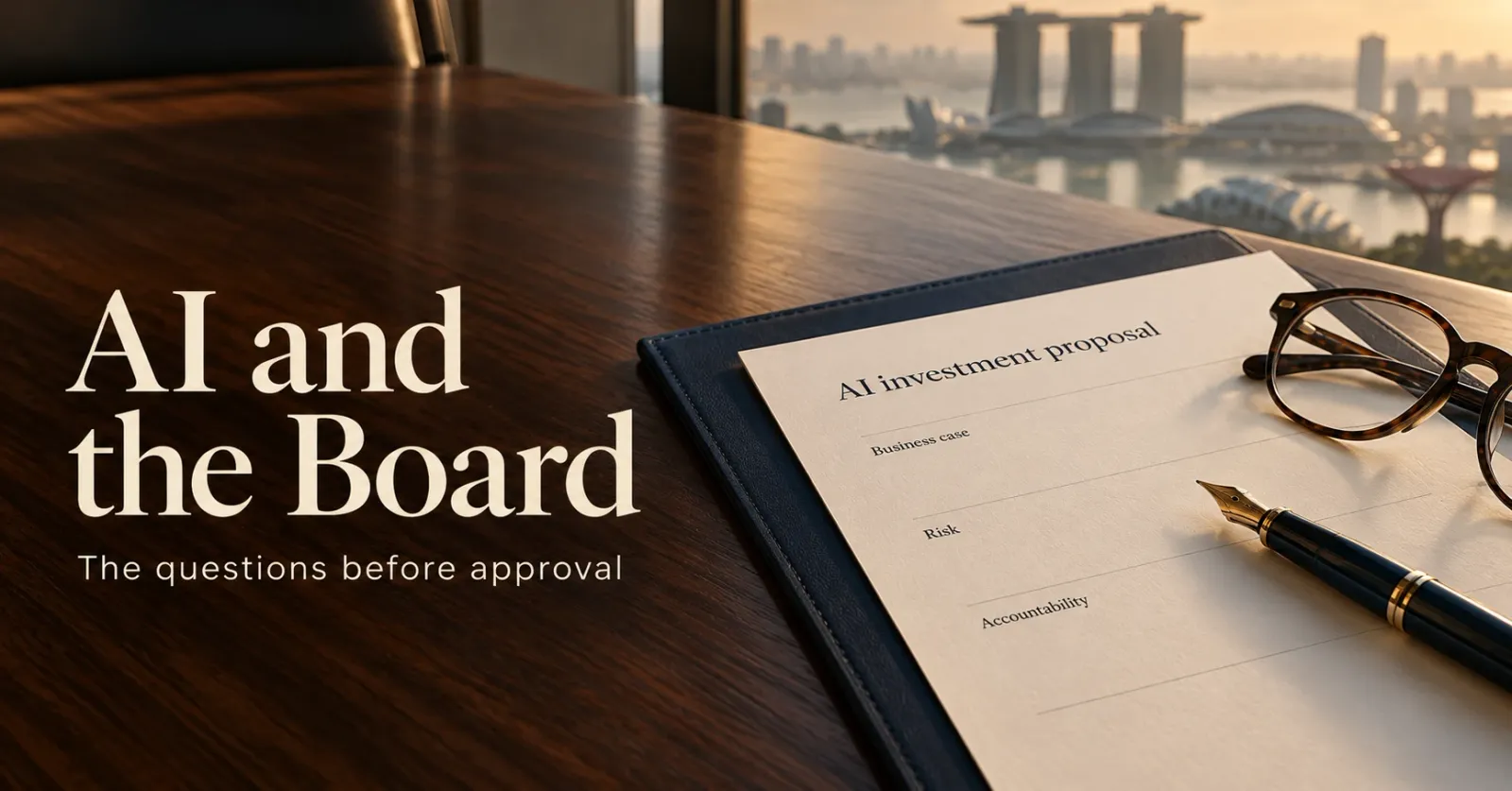
An AI proposal arrives at the board with a promise: faster work, lower costs or better decisions. Before approving the investment, directors need to understand what will actually improve, how the results will be measured and who will be accountable if it falls short.
That challenge is becoming relevant to more businesses. According to IMDA’s Singapore Digital Economy Report 2026, AI adoption among enterprises rose from 14.7% in 2024 to 23.5% in 2025.
The figures show wider adoption. They do not tell us whether each investment is delivering value. That is where board scrutiny matters.
Examine the commercial case
An AI investment deserves the same scrutiny as any other significant business decision. What problem will it solve? What will it cost to implement and maintain? What evidence would justify expanding its use?
Consider a customer service team proposing an AI tool to reduce the time spent answering enquiries. A useful pilot would examine accuracy, customer satisfaction, exceptions requiring staff attention and the full cost of running the service. Faster responses alone would not establish that the investment was successful.
Directors with experience in operations, finance and transformation can help test whether the business case accounts for integration, staff training, process changes and ongoing supervision. They can also ask whether a simpler change would achieve the same result.
Establish who is accountable
AI can enter a business through a formal technology programme or through tools employees adopt themselves. Boards should ask whether management understands where AI is being used and has controls appropriate to those uses.
Five questions provide a useful starting point:
- Who is accountable for AI use and who reports on its performance?
- Which applications need review before they affect customers or decisions with significant consequences?
- What information may employees enter into AI tools?
- How are outputs checked and when must a person intervene?
- What is the fallback if a supplier or system fails?
The board should hold management accountable for clear answers. Management and the relevant specialists should design and operate the controls. Directors also need to recognise when independent technical advice is required.
Review the board’s collective experience
The expertise a board needs depends on what the business is doing. Using AI to prepare internal drafts raises different questions from using it to assess customers or support decisions involving sensitive information.
Relevant experience may include technology investment, cybersecurity, data governance, financial scrutiny and workforce change. Sector knowledge matters too: directors need to understand how a proposed change could affect customers, operating risks and the economics of the business.
Those capabilities may already exist across several board members. Where there is a gap, the response could involve director development, specialist advice, an advisory appointment or a future board appointment. The choice should follow the business need, with a clear remit for any advice or appointment.
Show the decisions you can help a board make
For executives considering a non-executive or advisory role, a claim of “AI experience” becomes more persuasive when it is supported by examples of decisions and outcomes.
What investment did you assess? What implementation difficulty did you resolve? How did you balance commercial benefit with operational risk? When did you change course because the evidence did not support the plan?
These examples show how you exercise judgement. A board can use them to assess the relevance of your experience to its own decisions.
At DirectorSphere, we believe a strong board proposition should explain how your experience can help an organisation make better decisions. AI provides a useful test of that proposition: can you challenge the business case, recognise the limits of your expertise and help management establish clear accountability?
If you were assessing an AI proposal at your next board meeting, what would you want to know before approving it?
Source: IMDA, Singapore Digital Economy Report 2026. Adoption figures refer to 2024 and 2025. The board commentary is DirectorSphere’s interpretation.